How to Manage Window Sensor False Alarms: A 2026 Editorial
The efficacy of a residential security system is not measured by the volume of its siren, but by the trust the user places in its alerts. In the specialized domain of perimeter protection, the window sensor serves as the primary frontline observer. Yet, this observer is prone to a specific type of failure that is often more damaging than total dormancy: the false alarm. How to Manage Window Sensor False Alarms. A system that cries wolf with regularity does more than merely annoy neighbors; it induces “alarm fatigue,” a psychological state where the homeowner begins to delay responses or, eventually, disables the system entirely. This erosion of trust effectively renders the most expensive hardware investment useless.
Managing these erroneous triggers requires a shift from viewing a security system as a passive utility to seeing it as a sensitive data network. A window sensor—whether it is a magnetic contact, a vibration-sensing accelerometer, or an acoustic glass-break detector—does not possess “intelligence.” It merely reacts to a threshold crossing. When that threshold is crossed by a gust of wind, a curtain caught in a draft, or the thermal expansion of a timber frame, the system fulfills its mechanical duty by sounding the alarm. The human task, therefore, is to refine the environment and the installation to ensure that only a true breach generates a signal.
This analysis moves beyond the surface-level advice of “checking batteries.” It explores the mechanical, environmental, and digital variables that contribute to signal noise. By adopting a rigorous editorial approach to perimeter management, we can move toward a state of silent vigilance, where the absence of an alarm is a definitive confirmation of safety rather than a stroke of luck.
Understanding “How to Manage Window Sensor False Alarms”
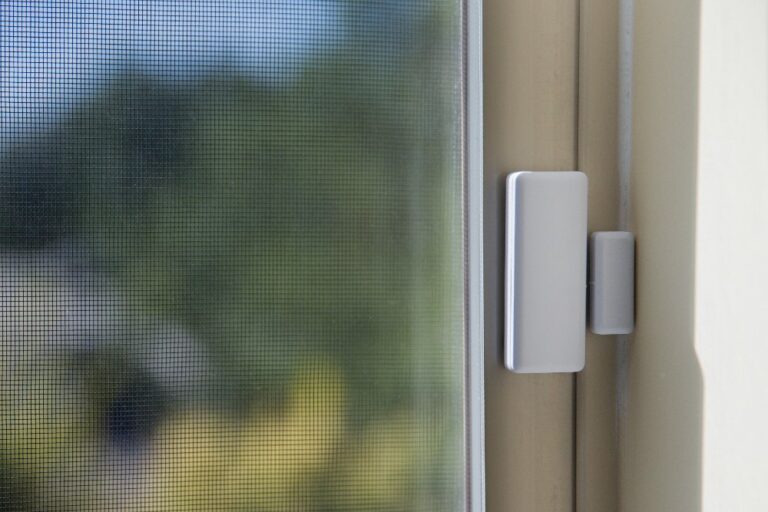
To effectively address the problem, one must first dismantle the oversimplification that a false alarm is always a hardware malfunction. In professional security circles, learning how to manage window sensor false alarms is treated as an exercise in environmental engineering. Most erroneous triggers are actually “nuisance alarms”—the sensor performed exactly as it was designed to, but the stimulus was not a threat. For example, a magnetic contact sensor that triggers because the window sash has 1/4 inch of “play” in the wind is technically functioning correctly, but its installation fails to account for the physical reality of the building.
A common misunderstanding involves the “one-size-fits-all” sensitivity setting. Homeowners often believe that setting a sensor to its maximum sensitivity provides the “best” security. In reality, this is the most common path to system abandonment. A highly sensitive vibration sensor on a ground-floor window near a busy truck route will inevitably fail the trust test. Therefore, managing these events requires a multi-perspective approach: looking at the mechanical fit of the window, the digital threshold of the software, and the behavioral patterns of the occupants.
The risk of oversimplification here is high. It is not enough to simply “gap” the magnets further apart or turn down the sensitivity. If the adjustment is too aggressive, the sensor may fail to trigger during a real, slow-force entry. The goal of learning how to manage window sensor false alarms is to find the “Goldilocks” zone—where the sensor is deaf to the environment but acutely sensitive to the intruder.
Historical and Systemic Evolution of Signal Reliability
The struggle with false alarms is as old as the electronic alarm itself. The mid-20th century “foil tape” systems were notoriously finicky; a simple scratch on the glass or a cleaning chemical that dissolved the adhesive would break the circuit. These were binary systems with zero discrimination. If the circuit broke, the bells rang. There was no “wait and see” logic and no digital filtering.
The introduction of the magnetic reed switch significantly improved reliability by removing the fragile glass-mounted circuit. However, it introduced a new mechanical variable: alignment. As homes settled and frames warped, magnets would slowly drift out of the “sensing zone,” leading to intermittent alarms that were maddeningly difficult to replicate.
The 21st-century shift to wireless mesh networks and microprocessor-controlled sensors has changed the landscape. Modern sensors can now perform “on-board” signal processing. A glass-break sensor in 2026 doesn’t just listen for a loud noise; it listens for the specific “thud” of an impact followed immediately by the high-frequency “shimmer” of breaking glass. Understanding this evolution is key to knowing how to manage window sensor false alarms in a modern context, as it allows us to utilize software-based filtering to compensate for mechanical imperfections.
Conceptual Frameworks for Perimeter Integrity
To categorize the causes and solutions of false triggers, three primary mental models are essential:
1. The Signal-to-Noise Ratio (SNR)
In security, the “Signal” is a human intruder, and the “Noise” is everything else (thunder, wind, pets, thermal expansion). The objective is to maximize the SNR. If the noise floor of a particular window is too high (e.g., a window that rattles), the “Signal” must be detected using a different modality, such as switching from a vibration sensor to a recessed magnetic contact.
2. The “Hard-Soft” Interaction
Windows are “hard” objects (glass, metal, wood) that exist in a “soft” environment (changing temperatures, wind, humidity). This framework acknowledges that the physical state of the window changes throughout the day. A sensor that is perfectly aligned at 2:00 PM when the sun is hitting the frame might be misaligned at 2:00 AM when the material has contracted in the cold.
3. The Two-Factor Verification Model
This model suggests that no single sensor trigger should lead to a high-priority alarm. Instead, “cross-zoning”—where an alarm is only fully triggered if a window sensor and a secondary motion sensor or camera detect something—is the ultimate way to manage false alarms without sacrificing detection.
Categories of Sensor Triggers and Mechanical Variations
Understanding the physical cause of an alarm is the first step in mitigation.
| Trigger Category | Primary Cause | Solution Strategy | Trade-off |
| Mechanical Play | Window rattles in wind | Weatherstripping or Wider-gap magnets | Too much weatherstripping can make window hard to lock. |
| Thermal Expansion | Sun heats metal frames | Recessed sensors or Center-alignment | Recessed sensors are permanent and invasive. |
| Acoustic Overload | TV volume or thunder | Frequency filtering/Sensitivity dial | May miss a “quiet” glass breakage. |
| RF Interference | Neighbor’s Wi-Fi/Jammers | Frequency hopping (Z-Wave/Thread) | Higher hardware cost for encrypted protocols. |
| Insect Interference | Spiders in the housing | Sealed units or insecticide | Chemicals can degrade plastic over time. |
Realistic Decision Logic
If a window triggers during a storm, the cause is likely mechanical (play). If it triggers at the same time every afternoon, it is likely thermal. If it triggers while the occupant is home and active, it is likely acoustic or behavioral. This logic dictates how to manage window sensor false alarms by identifying the pattern before attempting the fix.
Real-World Scenarios: Constraints and Failure Modes How to Manage Window Sensor False Alarms
The Historical Timber Double-Hung
Old wood windows are prone to “swelling” in summer. A magnet placed too close to the sensor might physically strike the sensor when the wood expands, damaging the reed switch.
-
Failure Mode: Permanent mechanical failure of the sensor.
-
Management Strategy: Use sensors with a wider operating gap (up to 1 inch) to allow for seasonal wood movement.
The Modern Metal-Frame High-Rise
Metal frames act as heat sinks and can also interfere with radio signals.
-
Failure Mode: “Sensor Offline” false alarms caused by signal attenuation.
-
Management Strategy: Use plastic spacers to lift the sensor off the metal surface, improving both magnetic and RF performance.
The Sunroom with Interior Curtains
Heavy drapes can blow in the wind when a window is “cracked” for ventilation, physically knocking a surface-mounted sensor.
-
Failure Mode: Nuisance alarm during “stay” arming.
-
Management Strategy: Reposition sensors to the top of the frame rather than the side, or use recessed hardware.
Planning, Cost, and Resource Dynamics
The financial burden of false alarms is often indirect but substantial.
| Cost Component | Range | Impact |
| Police Dispatch Fines | $50 – $250 per event | Significant; some cities revoke permits after 3 events. |
| Professional Service Call | $75 – $150 | Direct cost to recalibrate or move sensors. |
| Battery Replacement | $5 – $15 | Excessive “polling” due to signal noise drains batteries. |
| Psychological Cost | Intangible | System abandonment and loss of security. |
Mitigation Investment Table:
| Action | Estimated Cost | Long-term Savings |
| Weatherstripping (per window) | $10 | High; eliminates 80% of wind-related triggers. |
| Upgrading to Encrypted Hub | $100 – $300 | High; prevents RF-related false “tamper” alerts. |
| Acoustic Tuning (Professional) | $150 | Moderate; ensures glass-break sensors ignore the TV. |
Strategic Tools and Support Systems
To master how to manage window sensor false alarms, one needs a toolkit that extends beyond a screwdriver.
-
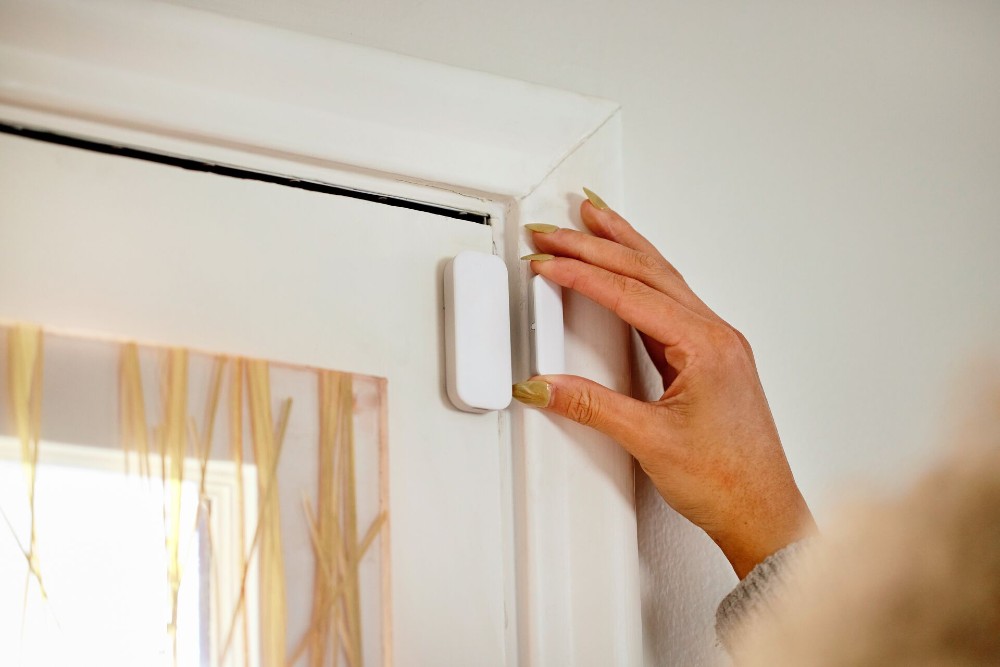
Magnet Spacers: Simple plastic shims that ensure magnets sit flush even on uneven window moldings.
-
Multimeters: Used to test the resistance of wired sensors to find “shorts” in the line.
-
Signal Strength Mapping: Software within the security app that identifies “dead zones” where a sensor might intermittently drop off, causing a “tamper” alarm.
-
Entry Delay Zones: Programming a 30-second delay for specific windows allows a user to disarm the system if they accidentally open a window without checking the alarm status.
-
Acoustic Testers: Handheld devices that mimic the sound of breaking glass to verify if a sensor is too sensitive or not sensitive enough.
Risk Landscape: Taxonomy of False Positives
False alarms generally fall into a specific taxonomy, each requiring a different management response:
-
Environmental: Wind, thunder, rain, or hail physically moving the sensor or creating acoustic noise.
-
Mechanical: Warped frames, loose sashes, or failing adhesives.
-
Electrical: Low batteries causing “erratic” reporting; power surges in wired systems.
-
Human/Behavioral: Opening a window while the system is armed; pets knocking sensors.
-
Digital/RF: Interference from other wireless devices or “collisions” on the 2.4GHz spectrum.
Governance, Maintenance, and Long-Term Adaptation
A security system requires a “governance” mindset—a set of rules and schedules to ensure its health.
The 3-6-12 Maintenance Cycle
-
Every 3 Months: Visual inspection of all adhesives. Gently tug on each sensor to ensure the 3M tape hasn’t become brittle.
-
Every 6 Months: Walk-test. Open every window to ensure the base station chimes instantly. This identifies sensors that are “lazy” or struggling with signal.
-
Every 12 Months: Battery overhaul. Do not wait for the low-battery notification; replace all batteries simultaneously to ensure consistent signal strength across the mesh.
Measurement, Tracking, and Evaluation
You cannot manage what you do not measure. A master of how to manage window sensor false alarms keeps a “Signal Log.”
-
Leading Indicators: “Low Battery” alerts; “Sensor Offline” notifications in the app history.
-
Lagging Indicators: Number of actual siren triggers; police dispatch events.
-
Documentation Example: “Window 4 (Kitchen) triggered at 3:00 PM on Tuesday. Weather: Sunny, 95°F. Diagnosis: Thermal expansion of vinyl frame causing magnet misalignment. Action: Added 2mm spacer.”
Common Misconceptions and Oversimplifications
-
Myth: “Wired sensors never have false alarms.” Correction: Wired sensors are prone to “ground loops” and wire degradation inside walls, which are harder to diagnose than wireless signal issues.
-
Myth: “A false alarm means the sensor is broken.” Correction: It usually means the sensor is doing its job in an environment that hasn’t been properly prepared for it.
-
Myth: “I can just bypass the windows that give me trouble.” Correction: Bypassing a window is creating a permanent hole in your security. It is a surrender, not a management strategy.
-
Myth: “Pets don’t trigger window sensors.” Correction: Large dogs jumping at windows can move a loose sash enough to trigger a magnetic contact.
Ethical and Practical Considerations
There is an ethical responsibility to the community when operating a security system. A system that triggers erroneously at 3:00 AM affects the sleep and well-being of the entire neighborhood. Furthermore, excessive false alarms burden the public sector; every time police respond to a “nuisance” alarm, they are unavailable for a life-threatening emergency elsewhere. Mastering how to manage window sensor false alarms is, therefore, a matter of civic duty as much as personal safety.
Synthesis and Final Perspective
The path to a reliable security system is paved with patience and precision. A window sensor is a powerful but literal-minded tool. It cannot distinguish between a burglar’s crowbar and a heavy gust of wind unless the human operator provides the necessary context. By refining the mechanical fit of the windows, utilizing digital signal processing, and maintaining a rigorous audit schedule, the “noise” of the environment can be silenced. The result is a system that remains invisible until the moment it is truly needed—a state of security that is defined by trust, not by the constant fear of a false alarm.